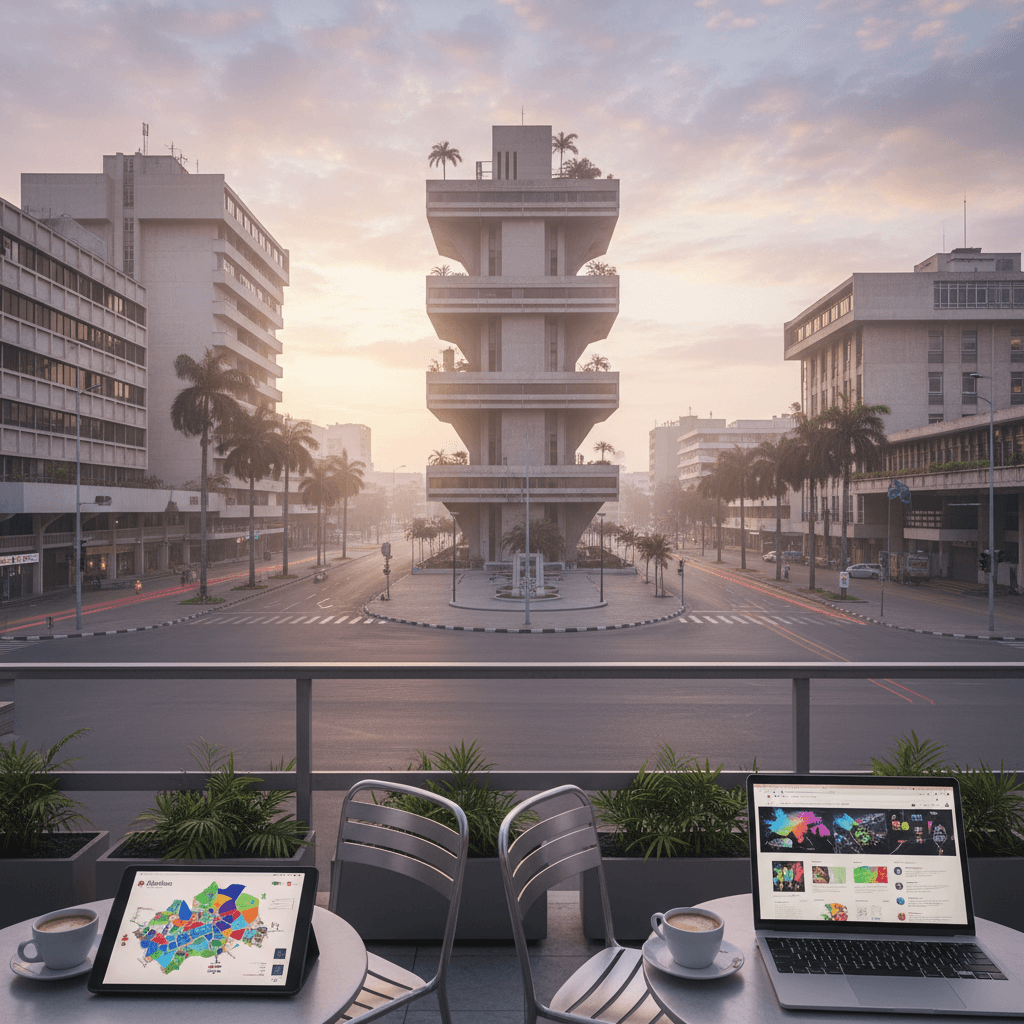
Abidjan
🇨🇮 Ivory Coast
The Business Mecca of West Africa
Abidjan doesn't just welcome you; it sweeps you up in a high speed, high energy embrace known as Akwaba. This isn't your typical laid back tropical escape. It's the economic powerhouse of Francophone Africa, a place where the scent of street side grilled alloco mingles with the exhaust of shiny European SUVs. For nomads, the vibe is unapologetically ambitious. You'll see people closing deals in luxury hotel lobbies and spending big in high end nightclubs, creating an atmosphere that feels more like a tropical Paris than a sleepy coastal town.
What sets Abidjan apart is this intersection of visible wealth and raw, West African soul. It's a city of contrasts where you can spend your morning on a fiber optic connection at Impact Hub Abidjan and your evening navigating a chaotic, neon lit street market. It’s the kind of place that rewards the bold. If you’re looking for a budget friendly starter city, this isn't it. Abidjan is for the mid career nomad or the entrepreneur who wants to be where the money and the influence are flowing.
The Daily Grind and the Nightly Glow
Life here centers around the neighborhoods of Cocody and Plateau. Plateau is the concrete jungle, the central business district where the skyline looks surprisingly Manhattan esque. Cocody is where the expats and the local elite retreat, filled with leafy streets and gated villas. Most nomads find that while the city is fast paced, the social culture is incredibly warm. You won't be a stranger for long if you're willing to attempt a few sentences of French and share a drink at a local maquis.
When the sun goes down, the city transforms. Abidjan is widely considered the nightlife capital of sub Saharan Africa. Whether you’re grabbing a cocktail at Le Seven or dancing until dawn in a club in Zone 4, the energy is infectious. There’s a specific kind of Abidjanais swagger that’s hard to find anywhere else; it’s a city that works hard and plays significantly harder.
Cost of Living Breakdown
Expect to pay a premium for the comforts of home. Abidjan is one of the most expensive cities in the region, largely because of the high demand for secure, modern housing. Most nomads should budget between $2,000 and $2,500 per month to live comfortably.
- Budget Tier ($1,500+): You'll be staying in further out neighborhoods like Marcory, eating almost exclusively at local stalls, and mastering the art of negotiating taxi fares in French.
- Mid Range Tier ($2,000 to $2,500): This covers a decent apartment in Cocody, a mix of street food and sit down restaurants, and a dedicated desk at a coworking space like AMN or Hubi.
- Comfortable Tier ($3,000+): You're looking at a modern 2BR apartment in Zone 4, frequenting fancy restaurants, and relying on ride hailing apps for every trip.
Connectivity and Logistics
The internet is surprisingly solid, with median speeds around 63 Mbps in the city center. However, the infrastructure can be temperamental. Power cuts happen, so seasoned nomads always keep a backup battery and a local Orange SIM card. You can pick up 12GB of data for about 10,000 CFA, which is roughly $17. Just remember to bring your passport to the store to get it registered.
Getting around is the biggest hurdle. Public transport is nearly non existent for anyone who doesn't know the city like a local. You'll spend a lot of time in taxis. While ride hailing apps are becoming the safer, preferred choice for expats, you’ll still need to brush up on your French. Very few people outside the major hotels speak English, so a translation app and a sense of humor are your best tools for navigating the day to day.
Why Nomads Choose Abidjan
Travelers often say they come for the business opportunities but stay for the culture. It’s the chance to be part of an emerging market while still having access to a Burger King, KFC, and high end French patisseries. It’s a place that feels like it’s on the move. Between the networking events at Seedspace and weekend trips to the colonial ruins of Grand Bassam or the beaches of Assouinde, Abidjan offers a lifestyle that is as exhausting as it is exhilarating.
The Price of the "Paris of West Africa"
Abidjan isn't your typical budget-friendly West African stopover. It's a high-energy business hub where the cost of living reflects its status as a regional economic powerhouse. If you're coming from Southeast Asia or even parts of Latin America, the price tags here might give you a bit of sticker shock. Most digital nomads find they need a monthly budget between $2,000 and $2,500 to live comfortably in the neighborhoods where you actually want to be.
Housing is the biggest hurdle, often eating up 40% to 50% of a nomad's monthly spend. You're paying for security, reliable infrastructure, and proximity to the business districts. While you can technically survive on $1,500 a month, it usually involves living far from the center, relying on local markets, and mastering the art of French negotiation for every single taxi ride.
Monthly Budget Tiers
- Budget ($1,500+): Stick to local street food, use negotiated communal taxis, and live in areas like Marcory or the outskirts. It's a steep learning curve if you don't speak French.
- Mid-range ($2,000 to $2,500): This is the sweet spot. It covers a decent apartment in Cocody or Plateau, a mix of cooking at home and eating out, and a dedicated desk at a coworking space like AMN or Hubi.
- Comfortable ($3,000+): You're looking at luxury apartments in Zone 4, frequenting high-end spots like Le Seven, and taking ride-hailing apps everywhere without checking the price.
Housing and Neighborhood Costs
Rent varies wildly depending on how "Western" you need your amenities to be. Most expats and nomads gravitate toward three main areas because they offer the best balance of safety and internet reliability.
Cocody & Zone 4
- The Vibe: These are the upscale, secure pockets favored by diplomats and families.
- Rent: Expect to pay a premium for 1BR or 2BR apartments, often matching European capital prices.
- Lifestyle: You're close to modern supermarkets and fancy restaurants, but you'll pay for the convenience.
Plateau
- The Vibe: The central business district. It's fast-paced and convenient for networking.
- Rent: High demand keeps prices elevated, though you'll be within walking distance of several coworking hubs.
- Lifestyle: Great for solo travelers who want to be in the thick of the action during the day.
Daily Expenses and Lifestyle
Eating out can be as cheap or as expensive as you want it to be. Roadside stalls and local markets are great for the wallet, but if you're craving a Burger King fix or a sit-down meal at an upscale bistro, expect to pay $15 to $30 per person. A local beer is usually affordable, but cocktails in the trendy lounges of Zone 4 will quickly inflate your "Social" category.
Connectivity is another non-negotiable expense. An Orange SIM card is the gold standard for nomads here. You can get 12GB of data for about 10,000 CFA (roughly $17). While 4G speeds are generally solid, hitting 60 Mbps in good areas, many nomads pay for a backup mobile hotspot to stay online during the occasional power dip.
Transportation is the final piece of the puzzle. Since public transit is nearly non-existent, you'll rely on taxis. While "orange taxis" are everywhere, most savvy travelers prefer ride-hailing apps for the fixed pricing and safety. It saves you the headache of haggling in French every time you want to cross the bridges.
For Digital Nomads: Plateau and Cocody-Centre
If you're in Abidjan to scale a business or knock out a heavy workload, Plateau is the heart of the action. It's the central business district, often called the Manhattan of West Africa because of its skyline and fast pace. You'll find the most reliable infrastructure here, with high-speed fiber and several coworking hubs like Impact Hub Abidjan and Akendewa. It's perfect for solo nomads who want to walk to work and grab a mid-range lunch for about $15. The downside is that it can feel a bit corporate and empty once the office workers head home for the evening.
For a better work-life balance, many nomads gravitate toward Cocody. It's more residential but still packed with amenities. You can set up shop at AMN or Hubi, which offer shared desks and on-site cafes. Renting a decent studio or one-bedroom in this area usually starts around $800 to $1,200, depending on how modern the building is. It's a social hub where you can easily meet other remote workers at networking events or over a coffee.
For Expats: Zone 4 (Marcory)
Zone 4, located within the larger Marcory district, is the undisputed heavyweight for the expat community. It feels like a city within a city, offering a high concentration of international grocery stores, European-style bakeries, and high-end gyms. Most expats choose this area because of the security and the sheer density of modern services. You won't have to go far for a Burger King fix or a fancy dinner at one of the upscale French or Lebanese restaurants.
Living here isn't cheap. Housing is high-end, and a well-secured two-bedroom apartment can easily eat up 40% to 50% of a monthly budget. Expect to pay $2,000 or more for a premium spot. However, the convenience is hard to beat. Most things you need are within a short taxi ride, and the nightlife scene is right on your doorstep. If you want to grab drinks or dance, Le Seven is a popular lounge bar in the area where the "Akwaba" welcome is always warm.
For Families: Cocody (Riviera and Ambassades)
Families usually look toward the quieter, greener parts of Cocody, specifically the Riviera and Quartier des Ambassades. These areas are far more suburban and offer the space needed for larger homes with gardens or pools. It's the most secure part of the city, home to many foreign diplomats and long-term international residents. You'll find several international schools nearby, making the morning school run much more manageable.
While the rents are among the highest in Abidjan, often exceeding $3,000 for a family home, the peace of mind and quality of life are the trade-offs. The streets are better paved, and it's one of the few places in the city where you might actually feel comfortable taking a short walk. You will definitely need a car or a dedicated driver here, as public transport is non-existent and the neighborhood is spread out.
For Solo Budget Travelers: Marcory and Outlying Areas
If you're watching your wallet, look at the residential pockets of Marcory outside of Zone 4. It's a mix of commercial and residential zones that feels more authentic and less "bubble-like" than the expat enclaves. You can find local guesthouses or older apartments for significantly less than the $2,000 city median. Eating at roadside stalls or local markets can keep your daily food costs under $20 if you're savvy.
Staying further out toward the fringes of the city can drop your costs even more, but there's a catch. You'll spend a lot of time and energy negotiating with taxi drivers in French, and the traffic into the center can be brutal. Most budget-conscious travelers find that the savings on rent are often offset by the stress of the commute. If you choose this route, make sure you have an Orange SIM with a solid data plan, usually 12GB for about 10,000 CFA, because home internet in cheaper rentals can be hit or miss.
- Cocody: Best for security and networking; high-end apartments and top coworking spaces.
- Plateau: Best for business; central location but very fast-paced and expensive.
- Zone 4: Best for social life and amenities; the heart of the expat scene.
- Marcory: Best for a local feel; offers more affordable housing options if you look outside the main strips.
Getting Online
Abidjan is surprisingly well connected for a West African hub. You can expect median speeds around 63 Mbps, which is plenty for video calls and heavy uploads. That said, the infrastructure still has its quirks. Power cuts happen, and when they do, your home fiber might go down with it. Most nomads here keep a backup plan in their pocket to stay online during outages.
Your first move should be heading to an Orange store to grab a SIM card. You will need your passport for registration. For about 10,000 CFA (roughly $17), you can get a 12GB data package. It is reliable, fast, and covers most of the city with solid 4G/LTE. Avoid buying SIMs from street vendors; they often aren't registered properly and will get cut off within days.
Top Coworking Spots
If you need a professional environment to escape the humidity, the city has a growing list of dedicated workspaces. These spots are also the best way to meet the local "tech-preneur" crowd.
- Huub Cowork: Located in a convenient spot for those staying in the central areas, this space offers shared desks and private offices. There is an on site café, which is perfect for when you don't want to leave the air conditioning for lunch.
- Impact Hub Abidjan: Part of the global network, this space is very collaborative. It is less about just "renting a desk" and more about joining a community of social entrepreneurs.
- Seedspace: One of the newer additions to the city, providing a sleek, modern environment that feels very much like a workspace you would find in Berlin or New York.
- Akendewa: This is a smaller but excellent option for those who prefer a more intimate, creative vibe over a corporate one.
Coffee Shop Culture
Working from cafes is a viable option in neighborhoods like Cocody and Zone 4. While the local "maquis" (open air eateries) are great for a cheap meal, they aren't built for laptops. Stick to the upscale pastry shops and French style cafes where the WiFi is generally stable and the staff won't mind if you linger over a café au lait for a few hours.
Most expats recommend calling ahead to check if the WiFi is "up" before you commit to a long taxi ride. If you are in Plateau, the business district, you will find plenty of hotel lobbies and high end spots where the connection is professional grade. Just keep in mind that these places often have "business prices" to match.
Practical Connectivity Tips
- Hardware: Bring a high quality surge protector. The electrical grid can be inconsistent, and you don't want a spike frying your MacBook.
- Power Banks: A large capacity power bank is a non negotiable item for your daily bag. It will save your life during the occasional afternoon blackout.
- Language: Most staff at the Orange or Moov stores won't speak much English. Have a translation app ready or bring a French speaking friend to help with the technical setup of your mobile data.
- VPN: While the internet is generally open, using a VPN is a good habit for security, especially when jumping between public cafe networks.
Staying Safe in the Economic Capital
Abidjan feels like a city on the move. The business energy in places like Plateau and Cocody is palpable, and for the most part, nomads find the environment welcoming. The local "Akwaba" spirit means people are generally helpful to foreigners, but like any metropolis of over 6 million people, you need to keep your wits about you. In 2026, the safety situation has stabilized significantly, especially in the primary expat hubs.
Most travelers feel perfectly comfortable in Cocody and Zone 4. These areas are well policed and home to most of the city's luxury infrastructure. Women living solo in Abidjan report feeling safe, provided they follow the standard big city playbook: avoid walking alone in poorly lit areas at night and leave the flashy jewelry at home. Stick to the neighborhoods where the digital nomad community clusters, like Marcory or Plateau, and you'll find the vibe is more about networking and commerce than anything else.
Street Smarts and Transport
The biggest safety tip for Abidjan isn't about crime; it's about how you get around. Public transport is nearly non-existent for foreigners, and hopping into a random taxi on the street requires high level French and a bit of a gamble. Instead, use ride-hailing apps. They provide a digital trail, fixed pricing, and generally better maintained vehicles. If you do take a traditional taxi, always negotiate the price before the wheels move.
- Stick to expat zones: Cocody and Zone 4 are the gold standard for security.
- Use technology: Book rides through apps rather than flagging cars on the street.
- Language matters: Carry a translation app if your French is rusty; it helps avoid misunderstandings that can lead to stressful situations.
- Power backups: While the city is modern, occasional outages happen. Keep a power bank charged so your phone (and your map) doesn't die while you're out.
Healthcare and Wellness
The healthcare infrastructure in Abidjan is some of the best in West Africa, but it's still a "pay to play" system. You'll find plenty of well stocked pharmacies across the city, which is a relief if you just need basic meds. For anything serious, expats and nomads head to the private clinics in Cocody, where the equipment is modern and the care is professional.
Before you even land, you have a major hurdle: the Yellow Fever certificate. This is a non-negotiable requirement for entry. While you can technically get the shot at the airport, it's a bureaucratic headache you don't want after a long flight. Get it done in your home country at least 10 days before you travel.
Medical Checklist
- Vaccinations: Yellow Fever is mandatory. Consult a travel clinic about Malaria prophylaxis, as the coastal humidity makes mosquitoes a year-round reality.
- Insurance: Always carry a policy that covers medical evacuation. While local clinics are good for basics, serious specialized care often happens abroad.
- Water: Stick to bottled water. Even in high end apartments in Zone 4, the tap water isn't worth the risk to your stomach.
- Emergency Transport: There is no reliable centralized ambulance service. In an emergency, your best bet is often a ride-hailing app or a private car to the nearest major hospital.
Overall, Abidjan doesn't feel "scary." It feels busy. If you have the budget to stay in the right neighborhoods and the sense to use apps for your transport, you'll likely find it a productive and secure base for your West African stint.
The Reality of Transit
Moving through Abidjan is a test of your patience and your French skills. The city is massive, and while it's the economic engine of West Africa, the public transit infrastructure hasn't quite kept pace with the gleaming skyscrapers in the Plateau. Most nomads find that walking isn't a viable option outside of very specific pockets in Cocody or Zone 4 because of the heat and the way the city is spread out.
You won't find a reliable metro or a bus system that's easy for a newcomer to decode. Instead, your life will revolve around four wheels and a lot of negotiation. If you're staying in the popular expat hubs, you'll likely spend a significant chunk of your budget just getting from your apartment to a coworking space like Hubi or AMN.
The Taxi Hierarchy
Taxis are the lifeblood of the city, but they aren't all created equal. You'll see two main types:
- Orange Taxis: These are the "official" meters, though the meters are rarely used. They can travel between all neighborhoods. You'll need to negotiate the fare before you get in. Expect to pay more if you don't speak French or if it's rush hour.
- Woro-Woro: These are color coded communal taxis that stay within specific neighborhoods. They're much cheaper, often costing just a few hundred CFA, but they follow set routes and you'll be sharing the backseat with strangers. It's a great way to save money if you're just ziping around Cocody or Marcory.
Ride-Hailing and Safety
For most digital nomads and expats, ride-hailing apps are the gold standard. They remove the stress of haggling in French and provide a digital trail of your journey, which is a big plus for safety. Travelers often say these apps are the most reliable way to get home after a late night at Le Seven or other spots in the Plateau.
Prices on these apps are fair, but they can spike during the tropical downpours that occasionally turn streets into rivers. Always check the app first to get a baseline price even if you decide to hail a physical taxi on the street. It gives you leverage during the negotiation.
Airport Transfers
Arriving at Felix Houphouet Boigny International Airport can be intense. You'll need your Yellow Fever certificate ready before you even hit the immigration line. For the trip into the city, avoid the aggressive touts at the exit. A taxi to Zone 4 or Cocody should cost you between 5,000 and 10,000 CFA depending on your bargaining skills and the time of day. Many luxury hotels and high end Airbnbs in Zone 4 offer shuttle services, which are worth the extra cost to avoid the first day's transit headache.
Practical Tips for the Road
- Traffic is brutal: Avoid crossing the bridges between the north and south sides of the city during morning and evening rush hours. A trip that takes 15 minutes at noon can take 90 minutes at 6:00 PM.
- Connectivity: Ensure your Orange SIM is topped up with data. You'll need it for maps and ride-hailing apps, as public Wi-Fi is nonexistent on the move.
- Language: If you don't speak French, have your destination written down or pinned on a map. Most drivers don't speak English, and "Akwaba" only gets you so far when you're trying to find a specific side street in Plateau.
- Safety: Stick to ride-hailing apps at night. While Abidjan is generally safe in the business districts, wandering into poorly lit areas looking for a taxi isn't recommended.
Typical Transport Costs
- Ride-hailing (Short trip): 2,000 to 3,500 CFA
- Orange Taxi (Cross-town): 3,000 to 5,000 CFA
- Woro-Woro (Local): 200 to 500 CFA
- Airport to Cocody: 7,000 to 10,000 CFA
The French Factor
If you're planning to set up shop in Abidjan, there is one reality you have to face immediately: French isn't just the official language, it's the only language for daily survival. Outside of high end hotel lobbies or specific tech meetups at Impact Hub Abidjan, English proficiency is remarkably low. You'll find that most locals are incredibly patient, but they won't magically understand English just because you speak slower.
Most nomads find that navigating the city requires at least a "survival" level of French. You will need it to negotiate taxi fares, which is a mandatory skill here since meters are rare and public transport is nearly nonexistent. If you walk into an Orange store to grab a 12,000 CFA data SIM, don't expect the staff to speak English. Have a translation app downloaded and ready for offline use; it will be your best friend during those first few weeks.
Key Phrases and Local Slang
The first word you'll hear is Akwaba. It means "welcome" in the local Twi language, and it's the cornerstone of Ivorian hospitality. You'll see it on signs at the airport and hear it when entering restaurants like Le Seven. Using it back with a smile goes a long way in establishing rapport with locals.
- Akwaba: Welcome. Use this to acknowledge the local hospitality.
- C'est combien?: How much? You'll say this dozens of times a day to taxi drivers and market vendors.
- On dit quoi?: The local "What's up?" or "How's it going?" It's informal Nouchi (Ivorian slang) that locals love hearing from expats.
- Ca va: Use this for everything from "I'm fine" to "It's okay" or "Deal" after negotiating a price.
The Digital Language Gap
While the business vibe in neighborhoods like Plateau feels modern and fast paced, the digital infrastructure hasn't fully translated into English yet. Local delivery apps and banking interfaces are almost exclusively in French. Expats recommend taking screenshots of menus or app interfaces and using a lens translator to figure out the finer details of your mobile data plan or rental agreement.
If your French is rusty, stick to the coworking circuit. Spaces like AMN, Hubi, and Seedspace are hubs for the international community. You'll find more English speakers here, and the networking events are often bilingual. It's the easiest way to find a community while you're still learning the difference between a "taxi compteur" and a "woro-woro."
Communication Logistics
Reliable communication starts with a local SIM card. Orange is the heavy hitter for coverage and speed, offering 12GB of data for about 10,000 CFA (roughly $17). You'll need your passport to register the card at an official boutique. While 4G speeds can hit 63 Mbps in prime areas like Cocody, outages happen. Most nomads keep a secondary SIM from a provider like Moov as a backup for when the primary network decides to take a nap.
For getting around, skip the stress of verbal directions and use ride hailing apps. It removes the language barrier of explaining a destination to a driver who might not know the specific street name. You just pin your location and go. It’s safer, the price is fixed, and you won't have to argue over change in broken French at the end of the ride.
The Climate Reality
Abidjan is unapologetically tropical. It's hot, humid, and coastal, meaning you'll spend most of your time in a light sweat unless you're tucked away in a Cocody coworking space with the AC cranked up. Temperatures stay consistent throughout the year, usually hovering around 31°C (88°F), but the humidity often makes it feel closer to 38°C (100°F).
The city operates on a rhythm dictated by the rain. You'll experience two distinct rainy seasons. The "big" rains hit from May to July, and a shorter, lighter wet season follows in October and November. During these months, downpours are sudden and intense, often turning streets into temporary rivers. If you're planning to get around via ride-hailing apps or negotiated taxis, expect major delays when the clouds open up.
The Best Window: December to February
Most nomads and expats agree that December through February is the sweet spot for visiting. This is the heart of the major dry season. The skies stay clear, the humidity drops slightly, and the vibe in neighborhoods like Zone 4 and Plateau is electric. It's the perfect time to explore the nightlife at spots like Le Seven or take weekend trips to the beaches of Assouinde without worrying about a washout.
This period also coincides with the Harmattan, a dry wind blowing in from the Sahara. It creates a hazy, dusty atmosphere, but it provides a welcome break from the oppressive coastal moisture. It's the most comfortable time for walking between meetings or enjoying the outdoor cafe culture that Abidjan is known for.
The Shoulder Season: August and September
If you want to avoid both the peak heat and the heaviest rains, August and September are interesting months. This is a "short dry season" where temperatures actually dip a few degrees, making it the coolest time of the year. Travelers often find this period ideal for visiting Banco National Park or the Jardin Botanique de Bingerville, as the vegetation is lush from the previous rains but the trails aren't underwater.
When to Be Cautious
While Abidjan is a year-round business hub, June is often the most challenging month. It's typically the wettest time of year, and the infrastructure can struggle with the volume of water. Power outages and internet flickers become more common during heavy storms, so if you're working on tight deadlines, you'll need a solid backup plan like an Orange SIM card with a loaded data plan and a portable power bank.
Seasonal Checklist for Nomads
- Dry Season (Dec to Feb): High season for travel. Book your apartments in Cocody early as prices can spike and availability drops.
- Peak Rain (May to July): Pack high-quality waterproof gear and expect higher taxi fares as demand surges during storms.
- Health Prep: Regardless of when you arrive, a Yellow Fever certificate is mandatory. Most travelers recommend getting this sorted well before landing at Felix-Houphouet-Boigny International Airport.
- Clothing: Stick to breathable linens and cotton. Even in the "cooler" months, the tropical sun is intense.
Ultimately, Abidjan's business-first energy doesn't stop for the weather. Whether it's the dusty haze of January or the torrential rains of June, the nightclubs stay packed and the coworking spaces remain the center of the city's professional life. Just aim for the winter months if you want the most seamless experience.
Connectivity and Power
You can't work in Abidjan without a solid backup plan. While the 4G/LTE speeds are surprisingly decent, often hitting 60 Mbps in central areas, power outages and internet hiccups still happen. Most nomads grab an Orange SIM card immediately. It'll cost you about 10,000 CFA (roughly $17) for 12GB of data. Just make sure to bring your passport to the store for registration, and don't expect the staff to speak much English.
For a reliable office environment, skip the hotel lobby and head to established coworking hubs. AMN and Hubi are the local favorites for their networking events and on-site cafes. If you're looking for a more collaborative startup vibe, Impact Hub Abidjan or Seedspace are your best bets. These spots are where you'll actually meet the local tech scene and other expats who can help you figure out the city's quirks.
Money and Budgeting
Abidjan isn't a budget destination. It's the economic engine of West Africa, and the prices reflect that. You'll likely need $2,000 to $2,500 per month to live comfortably in neighborhoods like Cocody or Plateau. A huge chunk of that, usually 40% to 50%, goes toward housing if you want modern amenities and security.
- Budget Tier ($1,500+): You'll be staying in outer neighborhoods, eating mostly street food, and haggling for every taxi ride.
- Mid-range Tier ($2,000 to $2,500): This covers a decent apartment in Cocody, regular coworking passes, and a mix of local and mid-range dining.
- Comfortable Tier ($3,000+): You're looking at luxury apartments in Zone 4, frequenting fancy restaurants, and using ride-hailing apps exclusively.
Navigation and Safety
Public transport is basically a myth for newcomers. You'll rely on taxis, but "random" street taxis can be a headache if your French isn't sharp. Expats and solo travelers generally recommend using ride-hailing apps for better safety and transparent pricing. It saves you from the exhausting process of negotiating every fare before you get in the car.
Safety has improved significantly, especially in the expat-heavy zones. Cocody and Zone 4 are well-secured and generally safe for women living alone. Still, keep your wits about you. Don't flash expensive jewelry or electronics in poorly lit areas, and always stick to trusted transport after dark. If you're heading out to enjoy the legendary nightlife at spots like Le Seven, it's best to go with a group.
Health and Entry Requirements
Before you even book your flight, get your Yellow Fever vaccination. You'll need the certificate to enter the country. While you can sometimes get it at the airport, it's a gamble you don't want to take after a long flight. For the visa, most travelers use the online e-visa system. It costs about $100 and usually processes within 48 hours. There isn't a specific digital nomad visa yet, so the standard tourist e-visa is the go-to option.
The healthcare system is expanding, and you'll find plenty of pharmacies stocked with French imports. However, for anything serious, expats usually head to private clinics in the upscale districts. Always keep some cash on hand for medical visits, as not all facilities handle international insurance claims on the spot.
Language and Culture
French is the currency of daily life here. If you don't speak it, download a translation app and prepare for some pantomiming. You'll hear the word "Akwaba" constantly; it's the local way of saying welcome, and it sets the tone for the hospitality you'll experience. People are generally business-minded and move fast, but they still value the social "hello" before getting down to business.
Need visa and immigration info for Ivory Coast?
🇨🇮 View Ivory Coast Country GuideHidden Gem
Worth the effort