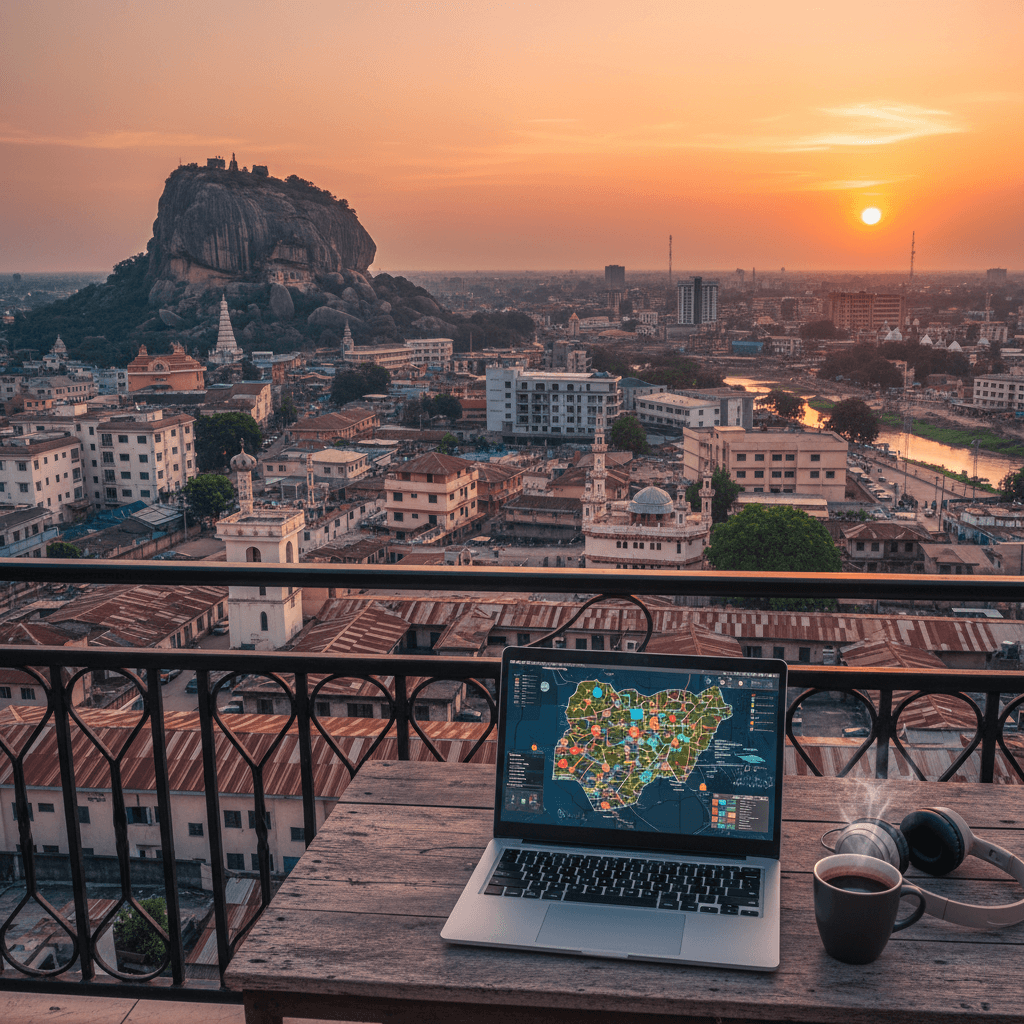
Abeokuta
🇳🇬 Nigeria
The Vibe of the Rock City
Abeokuta feels like a deep breath after the frantic, high speed chaos of Lagos. While it is the capital of Ogun State, the energy here is distinctly grounded. You are surrounded by the ancient presence of granite hills, most notably the massive Olumo Rock that watches over the city. It is a place where you can find a high end lounge in Ibara just a few blocks away from a market filled with artisans dyeing adire fabric using techniques passed down for centuries.
For digital nomads, the appeal lies in this balance. You get the infrastructure of a state capital, like the reliable backup power at theBUNKer, without the sensory overload of a megacity. Life moves at a human pace here. You will spend your mornings working with 50Mbps speeds and your afternoons eating abula at a local spot for about $3. It is affordable, culturally thick, and lacks the aggressive "hustle" culture that can make other Nigerian hubs exhausting.
Cost of Living Breakdown
Your money goes significantly further here than in Lagos or Abuja. A comfortable monthly budget for a solo nomad usually sits around $1,013, though you can live quite well on $900 if you opt for the outskirts. Here is what to expect for your monthly expenses:
- Budget Living ($500 to $800): This covers shared housing or a basic studio, relying on street food like roasted corn or suya, and using local kekes for transport at $0.37 per ride.
- Mid-Range ($900 to $1,300): This gets you a decent 1BR on the outskirts for $400 to $600, regular meals at mid-range restaurants, and daily Bolt rides.
- Comfortable ($1,500+): You will be looking at premium 1BR apartments in Ibara GRA for $600+, upscale dining, and full time coworking memberships.
Where to Set Up Base
Neighborhood choice is the most important factor for your safety and sanity. Most expats and remote workers gravitate toward the western side of the city. These are the top picks:
Ibara and GRA
- The Draw: This is the heartbeat of modern Abeokuta. It is secure, serene, and home to the best restaurants and government offices.
- Rent: Expect to pay around 700k to 800k Naira per year for a quality flat.
- Cons: It is the most expensive area in the city and can feel a bit bubbled off from the "real" local experience.
Oke-Ilewo and Hilltop
- The Draw: Highly planned and professional. It is close to the city center and very secure.
- Rent: Competitive with Ibara, often slightly more modern builds.
- Cons: Hilltop can get crowded with tourists visiting the rock formations during holidays.
Adigbe and Olomore
- The Draw: Great for those who want a quiet, residential feel. There are plenty of local parks and a slower pace.
- Cons: The nightlife is almost non-existent here; you will be taking a taxi to Ibara for evening fun.
Connectivity and Work
Inconsistent power is the biggest hurdle in Abeokuta, so a dedicated workspace is a necessity rather than a luxury. theBUNKer is the primary hub for the local tech scene, offering private offices for about 118,750 Naira per month or daily hot desks for $20. They have reliable power backups and wellness rooms for when the heat gets to you. For mobile data, grab an MTN or Airtel SIM card as soon as you arrive. Monthly data plans are cheap, and coverage is strong throughout the city center.
Practical Realities
The weather dictates the rhythm of the city. The dry season from November to March is the best time to visit, though you will deal with the Harmattan dust in December and January. Avoid the peak rainy season from July to September unless you enjoy navigating flooded streets and heavy downpours. For getting around, Bolt and InDriver are your best friends. A typical 8km ride costs around $9, and it is a much safer bet than trying to navigate the local bus system after dark.
Safety is generally good, but use common sense. Stick to well lit areas in Ibara or Adigbe at night and keep an eye on your belongings in crowded spots like Kuto Market. If you need medical care, the specialist hospital at Oke-Mosan is the top choice, with doctor visits starting around $10. Overall, Abeokuta offers a rare chance to see a different side of Nigeria, one that is deeply traditional yet increasingly ready for the global remote worker.
Budgeting for the Rock City
Abeokuta is a breath of fresh air for those looking to escape the aggressive price tags of Lagos. You can maintain a high quality of life here for about $1,013 a month, including your rent and lifestyle expenses. While it's significantly cheaper than the coastal hub to the south, the city is seeing a rise in premium developments that cater to remote workers and professionals who want comfort without the chaos.
Most nomads find they can live quite well on a mid range budget of $900 to $1,300. This typically covers a decent one bedroom apartment on the outskirts, regular Bolt rides, and frequent meals at mid range spots. If you're looking for the top tier experience in areas like Ibara GRA, expect to budget $1,500 or more to cover upscale dining and private office space.
Housing and Neighborhoods
Rent is your biggest variable and can fluctuate based on how modern the building is. A sleek 1BR in the city center usually lands around $625, though local prices for studios in prime spots range from ₦350k to ₦800k annually. Keep in mind that many landlords still prefer yearly upfront payments, though short let apartments are becoming more common for shorter stays.
- Ibara and GRA: This is where most expats and digital nomads land. It's secure, serene, and close to the best amenities. Expect higher rents and utility costs here, but it's the most reliable part of town for power and security.
- Oke-Ilewo and Hilltop: Great for professionals. It's a planned area near the city center. While Hilltop is beautiful, it can get a bit crowded with tourists visiting the nearby landmarks.
- Adigbe and Olomore: These are quieter, family oriented neighborhoods. They're perfect if you want to save on rent, though the nightlife is noticeably thinner than in Ibara.
- Panseke and Kuto: Best for solo travelers on a tight budget. These areas are right in the thick of the local markets. It’s affordable and culturally immersive, but you'll need to keep an eye on your pockets in the crowded market zones.
Connectivity and Working
Internet isn't the headache it used to be. High speed WiFi is available through providers like MTN and Airtel, with citywide plans starting around $16 a month. For a dedicated work environment, theBUNKer is the go to spot. Monthly coworking memberships run between ₦10,000 and ₦22,500, which is roughly $20 a day if you're just dropping in. They offer power backup and wellness rooms, which are lifesavers since the local grid can be temperamental.
Eating and Moving Around
Food is one of the biggest perks of living here. You can grab local street food like abula for $2 to $4. If you're heading out for a mid range dinner for two, expect to pay around $50. For groceries, sticking to local markets for produce and using Opay for quick transfers is the smoothest way to pay.
Getting around is simple thanks to ride hailing apps. Bolt, Uber, and InDriver are the primary ways to move; an 8km taxi ride usually costs about $9. If you're feeling adventurous, the local buses and kekes are incredibly cheap at $0.37 per ticket. If you're arriving from Lagos, a Bolt transfer from Murtala Muhammed Airport usually costs around ₦10,000+ depending on traffic and vehicle type in 2026.
Healthcare and Safety
Basic healthcare is affordable, with doctor visits costing around $10. A major 250 bed specialist hospital in Oke-Mosan is slated to begin partial operations in March 2025, with full services expected by June. For safety, it's best to stick to well lit areas like Ibara or Adigbe at night and use common sense in busy markets to avoid petty theft.
Digital Nomads: Ibara and GRA
If you are coming to Abeokuta to work, you will likely end up in the Ibara or GRA (Government Reserved Area) districts. These are the most developed pockets of the city, offering a mix of quiet residential streets and the infrastructure needed to stay productive. Expats and remote workers gravitate here because it is the most reliable place to find decent power backup and security.
The standout feature for nomads in Ibara is theBUNKer. It is the city's premier coworking space, offering high speed WiFi reaching 50Mbps and a professional environment that feels miles away from the city's chaotic markets. You can grab a day pass for roughly $20 or a monthly desk for between 10,000 and 22,500 Naira. Living here isn't cheap by local standards; a premium studio or one bedroom apartment can run between 350,000 and 800,000 Naira per year, but the peace of mind is usually worth the markup.
- Average Rent: $625 per month for a central one bedroom.
- Connectivity: Best in the city; home to major coworking hubs and reliable MTN or Airtel 4G coverage.
- Social Scene: High concentration of hotel lounges and upscale dining where you can actually find a quiet corner to talk.
Expats and Professionals: Oke-Ilewo and Hilltop
For those planning a longer stay or working with local firms, Oke-Ilewo is the heartbeat of the city's professional life. It is centrally located and highly planned, making it easy to hop between business meetings and social calls. Most professionals use Bolt or Uber to get around here, with a typical 8km ride costing about $9. It feels more urban and structured than the outskirts.
Hilltop is another favorite, especially for those who want a view. It sits near the higher elevations of the city, providing a cooler breeze and a bit of distance from the humidity. The downside is that it attracts tourist crowds because of its proximity to the landmarks, so it can get loud on weekends. Many expats prefer the gated feel of Hilltop for the extra layer of security it provides.
- Best For: Networking, proximity to government offices, and better road infrastructure.
- Daily Life: Easy access to supermarkets and the June 12 Cultural Center for evening events.
- Safety: Considered very safe for walking during daylight hours; stick to ride hailing apps after dark.
Families: Adigbe and Olomore
If you are traveling with a partner or children, Adigbe and Olomore offer a much slower, residential pace. These neighborhoods feel like proper communities rather than transit hubs. You will find more greenery, wider streets, and a higher density of private schools and parks. It is significantly quieter than the city center, which is a blessing if you are trying to escape the constant hum of generators and traffic.
The cost of living drops slightly here, and you can get a larger multi bedroom home for what you would pay for a small flat in Ibara. However, you will sacrifice some of the "walkability" to cafes. You'll definitely want to have the Opay app ready for quick transfers and local payments, as bank branches can be a bit further apart in these residential zones.
- Atmosphere: Calm, family oriented, and less "hustle" than the central districts.
- Pros: Lower rent, better access to local schools, and a neighborhood feel.
- Cons: Limited nightlife and longer commute times if you need to be in the city center daily.
Solo Travelers and Culture Seekers: Panseke and Kuto
For travelers who want to dive into the local Yoruba culture without the "expat bubble," Panseke and Kuto are where the action is. These areas are famous for their massive markets and the iconic Adire (tie dye) fabric trade. It is loud, gritty, and incredibly affordable. You can find street food like Abula for $2 to $4, and a local bus or "keke" ticket will only set you back about $0.37.
While these areas are great for soaking up the atmosphere, they come with a higher risk of petty theft in crowded spots. It is best to stay here only if you are an experienced traveler who is comfortable with high energy environments. You'll be close to the Olumo Rock area, making it easy to do morning hikes before the heat of the day kicks in.
- Monthly Budget: Can easily live on $500 to $800 including shared housing and local food.
- Experience: Authentic markets, traditional music, and direct access to the city's history.
- Warning: Avoid these areas late at night if you aren't familiar with the layout; stick to the well lit main roads.
Staying connected in Abeokuta requires a bit more strategy than in Lagos, but for the nomad who values peace over chaos, the tradeoff is worth it. You'll find that while fiber optics aren't on every street corner yet, the infrastructure for remote work is growing steadily, anchored by a few reliable hubs and a solid mobile data network.
Coworking Spaces
The undisputed king of the local scene is theBUNKer. Located in a central, accessible area, it's where you'll find the majority of the city's tech talent and remote professionals. It’s open from 9am to 9pm, which covers most time zones if you're working with European or East Coast teams.
The setup at theBUNKer is professional, featuring wellness rooms for when you need a break and, most importantly, consistent power backup. Expect to pay between ₦10,000 and ₦22,500 per month for a hot desk. Private offices start at around ₦75,000 daily; contact for monthly rates. Most nomads find the daily rate of roughly $20 a bit steep for the local economy, so it makes more sense to commit to a weekly or monthly pass if you're staying a while.
Mobile Data and SIM Cards
Don't rely solely on cafe WiFi. Your first move should be picking up a local SIM card. MTN and Airtel generally offer the best coverage and speed in the city, while Glo is a decent backup known for generous data volumes. You can grab these at the airport in Lagos before heading up or at various branded kiosks in markets like Kuto or Panseke.
- MTN: Often cited as the most reliable for video calls, with 4G speeds that can hit 20-50Mbps in neighborhoods like Ibara.
- Airtel: A strong competitor with competitive monthly bundles starting under $10 for significant data caps.
- Glo: Great for heavy downloading, though speeds can fluctuate during peak evening hours.
Expats recommend using a mobile hotspot device (often called a MiFi) rather than tethering from your phone to save battery and maintain a more stable signal. Monthly data plans citywide average around $16 for high-speed access.
Reliability and Power
The biggest hurdle in Abeokuta isn't the internet speed; it's the electricity. Power outages are a regular part of life. If you aren't working from a dedicated space like theBUNKer, you need to ensure your accommodation has a "changeover" system with a generator or solar inverter.
Most mid-range hotels and apartments in Ibara GRA or Oke-Ilewo provide some level of power backup. Always ask specifically about "light hours" before booking a long-term stay. Many cafes in the city center allow you to work for the price of a coffee, but they don't always have the backup power to keep your laptop charging through a grid failure.
Digital Finance Tips
To manage your local expenses and data top-ups, download OPay or PalmPay. These fintech apps are the lifeblood of local transactions. They're often more reliable than traditional bank apps for quick transfers to vendors or paying for your Bolt rides. Most nomads find that keeping a small balance in a digital wallet saves a lot of headache when physical POS machines at grocery stores are acting up.
Staying Safe in the Rock City
Abeokuta is generally much more relaxed than the high octane chaos of Lagos, but it still requires a level of street smarts. Most nomads feel comfortable here during the day, especially in the more developed pockets like Ibara and Adigbe. These are the areas where you'll want to base yourself if you're carrying a laptop or expensive camera gear.
Petty crime is the main thing to watch for. In crowded spots like Panseke or the Kuto markets, pickpocketing happens. It's also common for vendors to "adjust" prices for foreigners, so it helps to have a local friend or a regular Bolt driver who can give you the real scoop on what things should cost. Stick to well lit streets after dark and avoid the remote outskirts of the city once the sun goes down.
When you're out and about, ride hailing apps like Bolt or InDriver are your best bet for safety. They provide a digital trail that local yellow buses or "kekes" don't. While a bus ticket is only about $0.37, the peace of mind and air conditioning of a private car are usually worth the $9 for a cross city trip.
Healthcare and Medical Services
The medical landscape in Abeokuta is currently undergoing a major upgrade. A 250-bed specialist hospital at Oke-Mosan was planned for commissioning around late 2025; verify current status before recommending. This will likely become the gold standard for care in the region.
For now, you'll find plenty of smaller private clinics and pharmacies scattered throughout the city center. A standard consultation with a doctor usually costs around $10, which is incredibly affordable for most travelers. For minor ailments, local pharmacies are well stocked, though you should always check the expiration dates and seals on any medication you buy.
- Emergency Services: Be aware that ambulance response times can be slow due to traffic. Most expats rely on private transport to get to a hospital in an emergency.
- Pharmacy Access: Stick to reputable chains in Ibara or near the June 12 Cultural Center for the most reliable inventory.
- Insurance: Even with low local prices, keep your international nomad insurance active for any major issues that might require a transfer to a specialist facility in Lagos.
Practical Wellness Tips
Health isn't just about hospitals; it's about the environment. The Harmattan dust between December and February can be hard on the respiratory system. If you have asthma or sensitive sinuses, you'll want to keep a supply of saline spray or even wear a mask on particularly hazy days.
Water safety is another big one. Never drink the tap water here. Stick to bottled water or large 18 liter dispensers for your home setup. Most nomads also recommend using OPay for your day to day transactions, as carrying large amounts of cash is an unnecessary risk and the app is widely accepted by local merchants.
Navigating the Gateway City
Moving around Abeokuta feels like a breather compared to the frantic energy of Lagos, but it requires its own set of strategies. The city is defined by its rocky terrain and winding roads, meaning a short distance on a map might take longer than you expect due to elevation and local traffic patterns. Most nomads find that a mix of ride-hailing apps and the occasional local "keke" is the best way to maintain a balance between comfort and cost.
Ride-Hailing and Taxis
For most expats and digital nomads, Bolt is the primary way to get around. It is reliable, relatively safe, and removes the need to haggle over prices. You can also find drivers on Uber and InDriver, though Bolt tends to have the most active fleet in the city. A typical 8km trip across town will usually set you back about $9.
- Bolt: The most popular choice for reliability.
- InDriver: Useful if you want to negotiate your own fare before the driver arrives.
- Lagos Transfers: If you are heading to Murtala Muhammed International Airport (about 64km away), a Bolt ride usually costs between ₦3,500 and ₦5,500.
Public Transport: Kekes and Buses
If you are feeling adventurous or just want to save money, the local "keke marwa" (tricycles) are the lifeblood of the city. They are great for short hops within neighborhoods like Ibara or Panseke. A single ticket for a local bus or keke is incredibly cheap, often around $0.37. For those staying long term, a monthly transport pass averages about $16, though most nomads prefer the privacy of a car for longer hauls.
Walkability and Layout
Abeokuta is not a particularly walkable city in a traditional sense. While the central areas of Ibara and GRA are paved and relatively pleasant for a stroll, the heat and hills can make walking a chore. Traffic can get surprisingly heavy during peak hours, especially around the Kuto and Panseke markets. If you are exploring the historic center near Olumo Rock, expect steep inclines and uneven footpaths.
Driving and Safety Tips
Renting a car is an option, but driving yourself can be a headache if you aren't used to Nigerian road etiquette. If you do choose to drive, stick to well lit main roads and avoid the remote outskirts after dark. Petty crime is rare but can happen in crowded market areas, so keep your windows up and doors locked in slow moving traffic. Most locals recommend using OPay for quick digital payments if you need to settle a fare or tip a driver without carrying stacks of cash.
Quick Transport Reference
- Average Monthly Transport Spend: $53
- Keke/Bus Ticket: $0.37
- Standard Taxi Ride: $9
- Best App: Bolt
The Linguistic Mix
You'll find that getting by in Abeokuta is fairly straightforward if you speak English. As the official language of Nigeria, it's the default for business, government, and tech hubs like theBUNKer. Most locals in urban centers like Ibara and Oke-Ilewo are fluent, though you'll often hear a rhythmic, fast-paced version of English blended with local slang. If you're heading into the Kuto or Panseke markets to hunt for adire fabric, the energy shifts toward Yoruba, the heart and soul of the city's identity.
While you don't need to be fluent in Yoruba to survive, picking up a few phrases goes a long way. It changes the dynamic from being just another visitor to someone who respects the local heritage. In a city that moves slower than Lagos, taking the time to offer a proper greeting is expected. It's common to see younger people using a mix of English and Yoruba in casual settings, but with elders, a more formal approach is the standard.
Essential Local Phrases
- Pẹlẹ o: Hello (A general, respectful greeting).
- E dupe: Thank you.
- Eelo ni?: How much? (Vital for market haggling).
- Bẹẹni / Bẹẹkọ: Yes / No.
- O dabo: Goodbye.
Staying Connected
Reliable communication in Abeokuta depends on having a solid mobile data plan. Most nomads skip the hotel WiFi and go straight for a local SIM card. MTN and Airtel generally offer the best coverage across the city, while Glo is a popular backup. You can grab a SIM at the airport or various kiosks in Ibara. Monthly data plans start under $20 for generous volumes; check current MTN/Airtel promos.
For your banking and daily transactions, download OPay. It's the go-to app for quick transfers and is often more reliable than traditional banking apps when you're paying for a meal or a Bolt ride. If you're struggling with a specific dialect in the more traditional neighborhoods, the Google Translate app handles basic Yoruba well enough to get the point across.
Communication Etiquette
The way you speak is just as important as the words you use. Abeokuta is a city that prizes respect. When you enter a shop or a taxi, start with a greeting before jumping into your request. If you're talking to someone significantly older, a slight nod or a polite "sir" or "ma" is standard practice. Digital nomads often find that being overly direct can come off as rude, so softening your requests with a bit of small talk helps everything run smoother.
In professional spaces like theBUNKer, communication is modern and digital. Most networking happens via WhatsApp, which is the undisputed king of communication in Nigeria. Whether you're joining a local tech group on Facebook or Eventbrite, or just coordinating a weekend trip to Olumo Rock, expect your WhatsApp notifications to be the primary way you stay in the loop.
The Seasonal Rhythm
Abeokuta follows a classic West African tropical rhythm, split between a long, humid rainy season and a dusty, sun-drenched dry spell. If you are coming from Lagos, the air here feels slightly crisper thanks to the elevation and those iconic granite hills, but the heat is still very real. Most nomads find the sweet spot for a visit falls between December and February. This is when the weather is at its most predictable, though you will have to deal with the Harmattan, a seasonal wind that brings a hazy, fine dust from the Sahara. It keeps the temperatures a bit milder, ranging from 23°C to 33°C (73°F to 91°F), and makes outdoor treks up Olumo Rock much more bearable.
Surviving the Rain
If you arrive between April and October, pack a serious umbrella and some waterproof shoes. The rainy season peaks in July, August, and September, where you can expect upwards of 23 wet days per month. Temperatures during this window hover between 28°C and 32°C (82°F to 90°F), but the humidity makes it feel much heavier. While the rain turns the city lush and green, it also plays havoc with the local infrastructure. Power outages become more frequent during storms, and the traffic in central hubs like Kuto and Panseke can become a muddy bottleneck. If you are working from a spot like theBUNKer during these months, the backup power systems there are a lifesaver.
Timing Your Trip
Choosing when to book your stay depends largely on how much you value blue skies versus your tolerance for dust. Here is the breakdown of what to expect throughout the year:
- Peak Season (December to February): The most comfortable time for exploring. It is dry and relatively cool in the mornings. This is also when the city feels most alive with holiday events and festivals, though the dust can be tough on your electronics and sinuses.
- Shoulder Season (March and November): These are transition months. March is often the hottest month of the year before the rains break the heat. November is a great time to catch the tail end of the greenery before the landscape browns for the dry season.
- Off-Peak (June to September): Expect heavy downpours and grey skies. It is the cheapest time to find short term rentals, but outdoor activities are frequently rained out.
Practical Weather Tips for Nomads
Expats recommend keeping a close eye on your equipment during the Harmattan months. The fine dust gets everywhere, so a protective sleeve for your laptop is a must. If you are planning to do the "digital nomad" thing from a balcony or outdoor cafe, aim for the early mornings before 11:00 AM. After that, the sun hits hard, and you will likely want to retreat to the air-conditioned comfort of an office in Ibara GRA. Also, keep the Opay app handy for quick rides; when a sudden tropical storm hits in the afternoon, you will want a Bolt or Uber to show up fast so you aren't stuck under a shop awning for two hours.
For those who love local culture, try to time your visit with the annual Adire Festival or traditional Yoruba celebrations. These often align with the drier months, allowing you to see the famous indigo-dyed fabrics being made in the sun without the risk of a washout. Just remember that during the peak heat of March, your electricity bill for air conditioning in a mid-range apartment will likely climb above the average $26 utility estimate.
Getting Around and Staying Connected
Moving through Abeokuta is fairly straightforward if you rely on ride hailing apps. Bolt and InDriver are the most reliable ways to get around, especially for the 64km trip from Lagos Murtala Muhammed Airport, which usually costs between ₦3,500 and ₦5,500. For shorter hops within the city, an 8km taxi ride averages about $9. If you want to live like a local, the small yellow buses and kekes (tricycles) are everywhere, costing roughly $0.37 per trip.
For your digital setup, grab a SIM card from MTN or Airtel as soon as you arrive. Data is affordable, with high speed plans starting around $16 a month. While cafes are great for a quick email, the local power grid is notoriously fickle. Most nomads head to theBUNKer in the city center. It is open from 9am to 9pm and provides the backup power and stable 50Mbps fiber you will need for Zoom calls. A day pass is about $20, but monthly hot desk rates are much more economical at ₦10,000 to ₦22,500.
Where to Base Yourself
Your choice of neighborhood will define your experience here. Most expats and remote workers stick to the southern and central pockets for better security and infrastructure.
- Ibara and GRA: This is the upscale heart of the city. It is secure, serene, and home to most government offices. Expect to pay $625 or more for a premium one bedroom apartment.
- Oke-Ilewo: Excellent for professionals who want to be near the action. It is well planned and secure, though it gets a bit crowded near the Hilltop tourist spots.
- Adigbe: A favorite for those who prefer a quieter, residential feel. It is less about nightlife and more about local parks and a relaxed pace.
- Panseke: Best if you are on a strict budget and want to be near the big markets, though you will need to keep a closer eye on your pockets in these crowded areas.
The Cost of Living
Abeokuta is significantly cheaper than Lagos, making it a great spot to stretch your dollars. A comfortable lifestyle here usually runs about $1,500 a month, but you can get by on $800 if you opt for local housing and street food. Use Opay for your daily transactions; it is the go to fintech app for transfers and payments in Nigeria.
- Monthly Rent: $400 to $650 for a decent 1BR in a good area.
- Dining: $2 to $4 for street food like abula; $50 for a nice dinner for two in Ibara.
- Groceries: Budget around $244 per month.
- Utilities: Roughly $26, though this fluctuates based on how much you run your own generator.
Health, Safety, and Language
English is the official language and is spoken fluently by almost everyone you will meet in business or tech circles. However, learning a few Yoruba phrases goes a long way with the locals. Try Pẹlẹ o for hello or E dupe for thank you. If you are shopping at the Kuto or Adire markets, ask Eelo ni? to find out the price.
Safety is generally good if you stay in well lit, populated areas like Ibara or Adigbe. Avoid the remote outskirts after dark and stick to registered ride hailing apps rather than flagging down random cars. For healthcare, a new 250 bed specialist hospital in Oke-Mosan is slated to be fully operational by June 2025. Currently, a standard doctor visit will cost you about $10, and pharmacies are easy to find for basic needs.
Timing Your Visit
The weather dictates the rhythm of the city. The best window to visit is from December to February. It is dry and relatively mild, though the Harmattan winds can bring some dust during these months. Try to avoid July through September if you can; the heavy rains can turn the hilly streets into a bit of a challenge and make outdoor exploration like Olumo Rock much less enjoyable.
Need visa and immigration info for Nigeria?
🇳🇬 View Nigeria Country GuideHidden Gem
Worth the effort