A Coruña
🇪🇸 Spain
The Glass City Experience
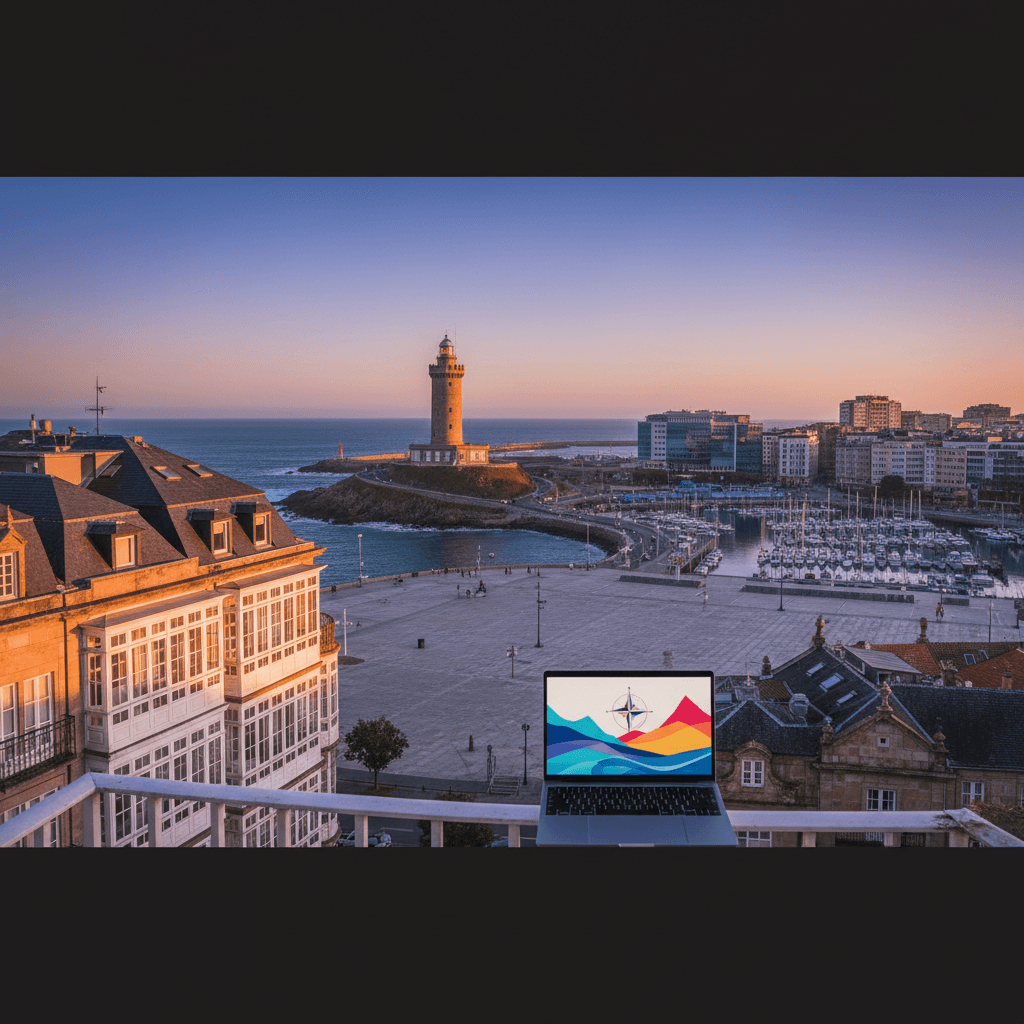
A Coruña is a city that lives and breathes with the Atlantic. It is often called the Crystal City because of the iconic galerías, those enclosed glass balconies that line the harbor and catch every bit of northern sunlight. While the rest of Spain might be baking in 40 degree heat, you will be walking along the Paseo Marítimo with a cool breeze and a view of the oldest working lighthouse in the world, the Tower of Hercules.
The vibe here is distinctively Galician. It is less about the flashy Mediterranean nightlife and more about the ritual of tapeo. You will see locals and nomads alike drifting from bar to bar in the Ciudad Vieja or along Calle Galera, grabbing a glass of Albariño and a plate of pulpo á feira. It is a place where life slows down, but the infrastructure stays fast. Most nomads find the 300 Mbps to 500 Mbps fiber speeds a pleasant surprise for a city that feels this historic.
Living Costs & Local Budgeting
One of the biggest draws for expats moving here from Madrid or Barcelona is the breathing room in the budget. You can live a high quality life here for significantly less than in the major hubs.
- Budget Nomad: Expect to spend between 1,500€ and 2,000€ per month. This usually covers a room in a shared flat and plenty of 3€ empanadas from local bakeries.
- Mid-range Lifestyle: Around 2,200€ to 3,000€ gets you a private one bedroom apartment in the center and frequent dinners at spots like Mesón do Porto, where a full meal runs about 25€.
- Comfortable Living: At 3,500€ and up, you are looking at a beachfront pad in Riazor and high end dining at Nave 1847.
Where to Plant Your Flag
Each neighborhood has a different personality, and where you stay will dictate your daily rhythm.
Zona Centro (Ensanche)
This is the heartbeat of the city. It is walkable, packed with cafes, and home to most of the professional energy. Rent for a one bedroom here usually lands between 750€ and 950€. It is perfect if you want to be steps away from O Cowork. The only downside is the weekend foot traffic can get a bit loud.
Ciudad Vieja (Old Town)
If you want character, this is it. The streets are narrow, stony, and atmospheric. Rents are slightly lower, ranging from 650€ to 850€. It is quiet during the day but wakes up in the evening with a local, authentic social scene. Just be prepared for a few hills and a longer walk to a major supermarket.
Riazor and Orzán
This is the surf and sand district. It is where you go if you want to check the waves from your window before opening your laptop. Apartments here are in high demand, often costing 850€ to 1,200€. It is incredibly refreshing in the summer, though travelers often warn that the wind and rain hit hardest on this side of the peninsula during the winter months.
The Reality Check
It is not all sunsets and seafood. The weather is the main talking point for anyone living here. You have to embrace the rain, which can hang around for over 150 days a year. Locals call the light drizzle orvallo, and you will quickly learn that a good raincoat is more useful than an umbrella, which the Atlantic wind will just snap anyway.
The community is growing, but it is still intimate. You won't find the massive, anonymous nomad meetups of Lisbon here. Instead, you'll find tight knit groups on Meetup.com or at the BiciCoruñesa stations. It is a city for the nomad who wants to actually integrate, learn a bit of Galician, and feel like a local rather than just another tourist with a laptop.
Living Costs at a Glance
A Coruña is a steal compared to the sky high prices of Madrid or Barcelona. You get the Atlantic breeze and some of Spain's best seafood without the "big city" tax. Most digital nomads find they can live a high quality life here on a budget that would barely cover a studio in Paris or London.
For a solo nomad, your monthly breakdown usually falls into one of these three buckets:
- Budget: 1,500€ to 2,000€. This covers a shared flat or a modest studio in a residential area like Los Mallos, eating mostly at home with the occasional 5€ empanada, and relying on the bus or your own two feet.
- Mid-range: 2,200€ to 3,000€. This is the sweet spot. You can snag a one bedroom in the city center, eat out at local spots a few times a week, and keep a dedicated desk at a coworking space.
- Comfortable: 3,500€+. This gets you a beachfront apartment in Riazor with ocean views, frequent dinners at upscale places, and zero stress about your monthly spending.
Rent and Neighborhoods
Housing will be your biggest expense, but even the "expensive" areas are relatively accessible. Rent prices fluctuate based on proximity to the water and how modern the interior is. Keep in mind that older buildings in the Old Town might have plenty of character but can be drafty during the rainy winters.
- Zona Centro (Ensanche): This is the heartbeat of the city. It's walkable to almost every coworking space and the best cafes. Expect to pay between 750€ and 950€ for a one bedroom apartment. It's the top pick for nomads who want to be in the middle of everything.
- Ciudad Vieja (Old Town): If you want historic charm and cobblestones, this is it. Rents are slightly lower, usually 650€ to 850€, but you might have to walk a bit further for a large supermarket.
- Riazor and Orzán: These are the beach neighborhoods. You're paying for the view and the lifestyle here. A nice apartment will run you 850€ to 1,200€. It's incredibly lively in the summer but can get quite windy when the Atlantic storms roll in.
- Los Mallos: A more traditional, residential neighborhood. It's quieter and less "nomady," with prices ranging from 700€ to 900€ for larger spaces. It's only a ten minute bus ride from the center.
Food and Dining
Galicia is famous for its food, and A Coruña is no exception. You can eat very well here without breaking the bank. Grocery shopping at local markets like Plaza de Lugo is a great way to save money while getting world class ingredients.
- Street Food and Snacks: A quick bocadillo or a hearty slice of empanada will cost you between 3€ and 6€.
- Mid-range Dining: A solid meal with wine at a local tavern usually lands between 15€ and 25€. Don't skip the pulpo (octopus), which usually costs around 15€ per portion.
- Fine Dining: If you're celebrating, a high end meal will cost between 40€ and 60€ per person.
- Coffee and Drinks: A cafe con leche is usually 1.50€, and a beer is similarly priced. It's one of the few places left where the social life is cheaper than the caffeine habit.
Transport and Connectivity
The city is compact and highly walkable, which is a major cost saver. Most nomads rarely use the bus unless it's pouring rain. For getting further afield, the infrastructure is reliable and cheap.
- Public Transport: A single bus ride is 1.50€, but if you're staying for a while, the monthly pass at 35€ is the way to go.
- Bikes and Scooters: The BiciCoruñesa bike sharing app is popular among locals. Electric scooters like Lime are also available, charging about 0.20€ per minute.
- Coworking: Staying productive is easy here. The city offers several coworking hubs and shared offices, ranging from quiet boutique spaces to more corporate environments, ensuring you can find a professional community that fits your workflow.
- Mobile Data: Grab a local SIM from Orange or Vodafone for about 20€ for a month of unlimited data. If you prefer the convenience of an eSIM, Airalo has 10GB plans for around 10€.
For Nomads: Zona Centro (Ensanche)
If you want to be where the action is, Ensanche is your best bet. It's the city's commercial heartbeat, packed with those iconic glass balconies and a high density of cafes where the WiFi actually works. Most nomads gravitate here because you can walk to O Cowork on Rúa Real or the new WeWork at Plaza de Galicia in under ten minutes.
Expect to pay between 750€ and 950€ for a decent one bedroom apartment. It's a bit busier than other spots, but you're trading quiet for convenience. You'll have local favorites like Café Bar La Tita nearby for a quick 1.50€ espresso between Zoom calls. The networking scene is strongest here, making it easy to find fellow remote workers at weekly meetups.
For Solo Travelers: Ciudad Vieja (Old Town)
The Old Town is where you'll find the soul of A Coruña. It's perfect if you prioritize character and history over having a massive supermarket next door. The streets are narrow, winding, and hilly, leading to quiet plazas that come alive with tapas seekers in the evening. Solo travelers often say it's the easiest place to feel like a local quickly.
Rents are slightly more affordable here, usually ranging from 650€ to 850€. You'll be close to the nightlife in Orzán but far enough away to get a good night's sleep. Just keep in mind that the historic buildings sometimes have thicker walls that can challenge your WiFi signal, so check the router placement before signing a lease. It's a great spot for evening strolls along the harbor without needing a bus pass.
For Beach Lovers: Riazor and Orzán
If your ideal morning starts with a surf session or a run along the Atlantic, look no further. These neighborhoods sit right on the coastline, offering immediate access to the city's main beaches. It's a relaxed, breezy vibe that feels worlds away from the city center, even though it's only a fifteen minute walk. Expats recommend this area for the views, though they warn that the wind can get fierce during the rainy season.
Living on the waterfront comes with a premium. Expect prices between 850€ and 1,200€ for a place with a view. You'll have plenty of social options, with bars lining the streets of Orzán where a beer and a tapa won't set you back more than 4€ or 5€. It gets crowded during the summer months, but the energy is infectious.
For Expats and Families: Los Mallos
Los Mallos is the go-to for those planning a longer stay or moving with kids. It's a more traditional residential area with plenty of green spaces and better access to schools. It feels less like a tourist hub and more like a real neighborhood where people recognize their neighbors at the bakery. It's also closer to the train station, which is handy for weekend trips to Santiago de Compostela.
The cost of living drops here, with spacious apartments going for 700€ to 900€. While it's a bit further from the city center, the BiciCoruñesa bike share app makes the ten minute commute easy and cheap. You'll find more authentic Galician dining options here, like Raxó, where a massive plate of octopus costs around 15€. It's the best choice if you want more square footage and a quieter environment for a lower price tag.
Connectivity on the Atlantic Coast
You won't have to worry about dropping off the grid in A Coruña. The city is wired with high speed fiber optics that make it a reliable base for heavy data users. Most apartments and cafes offer speeds averaging 300 Mbps, and it's common to see 500 Mbps or even 1 Gbps in newer builds. If you're coming from the US or UK, you'll likely find the internet here faster and significantly cheaper than what you're used to back home.
Mobile data is just as seamless. You can grab a local SIM from Orange or Vodafone for about 20€, which usually gets you more data than you could possibly use in a month. For those who prefer to hit the ground running, Airalo and Holafly eSIMs work perfectly here, though they're slightly pricier than local physical cards. Expect 5G coverage throughout the city center and along the beachfront.
Top Coworking Spaces
While the nomad community is smaller than what you'll find in Lisbon or Barcelona, the coworking scene is high quality and growing. These spaces are excellent for meeting locals and other remote workers who have traded the big city grind for Galician air. You will find several dedicated hubs throughout the city center that offer flexible daily and monthly rates, providing a professional environment with high-speed infrastructure.
Laptop-Friendly Cafes
The local cafe culture is strong, but Galicians take their social time seriously. Most spots are happy to let you work for a few hours as long as it's not during the lunch or dinner rush. You'll find that Café Bar La Tita is a favorite for its reliable WiFi and affordable 1.50€ coffee. It's a great place to knock out emails before the evening tapas crowd arrives.
In the Zona Centro, you'll find plenty of modern cafes with power outlets and decent table space. If you're near Riazor beach, there are several spots where you can work with a view of the Atlantic, though the salt air and wind might make you want to stay indoors during the winter months. Just look for the WiFi signs or ask for the password when you order your first café con leche.
Practical Tips for Remote Work
If you're planning a long term stay, look for apartments on Idealista or Spotahome and always ask for a speed test before signing. Most landlords are happy to send a screenshot. While the city is very walkable, choosing a place in Ensanche or Ciudad Vieja puts you within a 10 minute stroll of the best workspaces and the fastest infrastructure.
One thing travelers often mention is the specific rhythm of the day. Many smaller businesses and some cafes might close for a few hours in the afternoon. If you're working on a US time zone, you'll find the city is actually most alive during your late afternoon and evening, which makes finding a dinner spot after a 6 PM meeting very easy.
A City Built on Peace of Mind
A Coruña is one of those rare European cities where you can actually let your guard down. It consistently ranks as one of the safest urban centers in Spain, far removed from the aggressive pickpocketing issues that plague Barcelona or Madrid. Most nomads find they can walk home from a late dinner in the Ciudad Vieja or along the Paseo Marítimo without a second thought. The local culture is tight knit and community oriented, which naturally keeps crime rates low.
While the city is incredibly secure, common sense still applies near the nightlife hubs. Expats recommend keeping an eye on your belongings in the crowded tapas bars of Orzán on Friday nights. The only other real "danger" is the Atlantic itself. The waves at Riazor Beach can be deceptively strong during winter storms; travelers often warn newcomers to respect the red flags and avoid unlit beach paths when the tide is high and the wind is whipping.
Navigating the Healthcare System
If you're moving here, you're in good hands. The healthcare in Galicia is top tier, anchored by the CHUAC (Complejo Hospitalario Universitario de A Coruña). This public hospital is a regional powerhouse known for high quality specialized care. For day to day issues, the Sergas (Galician Public Health Service) manages a network of local clinics called Centros de Saúde. If you're an EU citizen, your EHIC card covers you for emergency visits, but digital nomads on the Spanish Nomad Visa will eventually transition into the public system via social security contributions.
Many remote workers opt for private insurance like Sanitas or Adeslas to skip the wait times for specialists. Private clinics like HM Rosaleda or Hospital Quirónsalud are favorites for expats because they often have English speaking staff on hand. A standard private consultation usually runs between €60 and €100 if you're paying out of pocket.
Pharmacies and Emergency Services
You'll spot a green neon cross on almost every other block. Pharmacies (farmacias) in A Coruña handle much more than just prescriptions; they're the first stop for minor ailments or health advice. For late night needs, the Farmacia Central is a reliable 24 hour option. If things get serious, the emergency number is 112, which connects you to police, fire, and ambulance services with English speaking operators usually available.
Safety and Health Essentials
- Emergency Number: Dial 112 for all urgent services.
- Safety Index: Scores a high 75/100 on recent safety databases.
- Tap Water: Completely safe to drink and actually tastes better than the water in southern Spain.
- Pharmacy Hours: Generally 9:30 AM to 9:00 PM, with rotating "Farmacias de Guardia" for overnight service.
- Top Hospital: CHUAC for emergencies; Quirónsalud for private care.
Living here feels like being in a protective bubble. Whether you're jogging along the seven mile promenade or working from a cafe in Ensanche, the lack of "big city" stress is palpable. It's a place where the biggest health concern for most nomads is simply remembering to pack a sturdy umbrella for the Galician mist.
The Walkability Factor
A Coruña is a dream for anyone who prefers their own two feet to a steering wheel. The city is shaped like a peninsula, and the central core is incredibly compact. You can walk from the historic Ciudad Vieja to the modern shops in Ensanche in under 15 minutes. Most nomads find they rarely need motorized transport unless they're heading to the outer residential districts like Los Mallos or the university campus.
The city's crown jewel for pedestrians is the Paseo Marítimo. At over 13 kilometers, it's one of the longest seaside promenades in Europe. It's perfectly paved for runners, walkers, and cyclists, connecting the city beaches to the Tower of Hercules. If you live near Riazor, your morning commute to a downtown cafe is basically a scenic coastal hike.
Public Buses: The Tranvía Network
When the Galician rain inevitably sets in, the local bus system, operated by Compañía de Tranvías, is your best friend. The red buses are frequent and cover almost every corner of the municipality. A single ride costs 1.50€, but if you're staying for more than a week, get a Millennium Card. It drops the price significantly and makes boarding much faster.
- Monthly Pass: Around 35€ for unlimited city travel.
- Key Routes: The Line 1A and Line 2 are staples for getting from the port area to the train station.
- App: Download the iTranvías app to see real-time arrivals. It's surprisingly accurate for a smaller city.
Bikes and Scooters
The city has made a massive push toward green mobility. The BiciCoruñesa bike-sharing program is the local favorite. They have a mix of mechanical and electric bikes parked at stations across the city. You'll need the app to unlock them, and an annual subscription is dirt cheap for residents, though travelers often stick to the pay-as-you-go rates.
Electric scooters from brands like Lime are also scattered around the center. They usually cost about 1€ to unlock and 0.20€ per minute. Just stay off the narrow sidewalks in the Old Town; the local police are strict about keeping scooters on the designated bike lanes or the road.
Taxis and Ride-Hailing
Uber and Cabify both operate here, though the fleet isn't as massive as you'd find in Madrid. Expect to pay between 8€ and 12€ for a cross-town trip. Local taxis are white with a blue stripe and are everywhere. You can hail them on the street or find them at designated stands near Plaza de Lugo and Obelisco. They're metered and reliable, and almost all of them accept credit cards now.
Getting to the Airport and Beyond
A Coruña Airport (LCG) is about 8 kilometers from the center. A taxi is the fastest way out, costing a flat-ish rate of about 15€ to 20€. For a budget option, the A1 bus runs every 30 minutes and costs only 3€. It drops you off at Puerta Real, right in the heart of the city.
For weekend trips, the Renfe train station (San Cristóbal) connects you to Santiago de Compostela in just 30 minutes for about 7€. If you want to explore the rugged Costa da Morte, you'll need to rent a car. Companies like Enterprise and Europcar have offices near the train station, with daily rates starting around 35€ during the off-season.
The Galician Language Dynamic
In A Coruña, you'll notice two languages living side by side: Spanish (Castellano) and Galician (Galego). Most street signs, menus, and official documents are bilingual. While everyone speaks Spanish fluently, Galician is the soulful heartbeat of the region. It sounds like a melodic mix of Spanish and Portuguese, reflecting the city's Atlantic roots.
Expats find that locals are incredibly proud of their heritage but aren't exclusionary about it. You don't need to speak Galego to get by, but learning a few words like "Ola" (Hello) or "Grazas" (Thank you) goes a long way in building rapport with the vendors at Plaza de Lugo market. Most younger professionals and hospitality staff in the Ensanche district speak decent English, but proficiency levels drop quickly once you head into residential areas like Los Mallos.
English Proficiency and Daily Life
If you're planning to stay in the digital nomad bubble, you can survive with English. However, for administrative tasks like setting up a local bank account at BBVA or dealing with a landlord on Idealista, you'll want a translation app or a Spanish-speaking friend handy.
Travelers often mention that while the "international" vibe is growing, A Coruña remains authentically Spanish. You won't find the high English fluency of Madrid or Barcelona here. Most nomads estimate that about 40% to 50% of people in the city center have a working knowledge of English. If you're heading to a traditional taberna in the Ciudad Vieja for some octopus, expect to order in Spanish.
Essential Tools and Connectivity
Technology bridges the gap effectively here. Digital nomads recommend a few specific tools to keep communication seamless:
- WhatsApp: This is the universal communication tool in Spain. Whether you're booking a haircut, talking to your landlord, or joining the A Coruña Digital Nomads Meetup group, everything happens here.
- DeepL: While Google Translate is fine, DeepL handles the nuances of Spanish and Galician much better, especially for formal emails or lease agreements.
- Google Translate (Offline): Essential for the rainy days when you're tucked away in a basement cafe with spotty signal. Make sure to download the Spanish and Galician packs.
- Voice-to-Text: Great for quick interactions at the pharmacy or when asking for directions near Tower of Hercules.
Communication Etiquette
Galicians have a reputation for being slightly more reserved than Southerners in Seville, but they're deeply helpful once you break the ice. The "Galician shrug" is a real thing; locals are famously non-committal with their answers, often answering a question with another question. It's all part of the charm.
When you're out for tapas in Orzán, don't be afraid to use "Spanglish." Locals appreciate the effort of trying to speak the language, even if you're struggling. A loud, confident "Buenas" when entering a shop and "Hasta luego" when leaving is the standard social glue that keeps the city moving. If you're looking for formal classes, several language schools near Plaza de Pontevedra offer intensive Spanish courses for around 150€ to 200€ per week, which is a great way to meet other expats.
Quick Phrase Guide
- Ola, que tal? (Hello, how are you?) - Works in both Spanish and Galician.
- A conta, por favor. (The bill, please.) - You'll use this daily.
- Canto custa? (How much does it cost?) - Useful at the local markets.
- Non falo moito español. (I don't speak much Spanish.) - A polite way to signal you might need a bit of patience.
The Atlantic Rhythm
A Coruña doesn't follow the typical Mediterranean script. Instead of scorched summers and bone dry landscapes, you'll find a lush, maritime climate governed by the Atlantic. It's a city of soft light and dramatic waves where the weather is a constant conversation starter. Most nomads find the air quality incredible, but you have to be okay with the trade off: moisture is part of the local DNA.
The temperature rarely swings to extremes. You won't deal with the 40°C heatwaves that paralyze Madrid or Seville, nor will you face freezing continental winters. It's a steady, mild experience that keeps the surrounding Galician hills deep green year round.
When to Touch Down
If you're looking for the sweet spot, aim for May through September. This is when the city truly opens up. The days are long, the Riazor and Orzán beaches are packed until sunset, and the rain takes a much needed break. While the rest of Spain swelters, A Coruña stays a comfortable 20°C to 25°C, making it a sanctuary for remote workers who hate sweating through their zoom calls.
Expats often recommend June specifically. The city celebrates San Juan with massive bonfires on the beach, and the energy is electric. You'll get the best balance of sunny skies and manageable prices before the peak domestic tourism hit in August.
The Rainy Reality
You can't talk about A Coruña without talking about the rain. It's famous for it. From November through March, the city sees about 15 to 18 days of rain per month. It's rarely a torrential downpour; locals call it "sirimiri," a fine, persistent mist that lingers. If you're planning a winter stay, a high quality raincoat is more important than a heavy parka.
Winter temperatures hover between 8°C and 13°C. It's damp and windy, especially near the Tower of Hercules. While the "galerías" (the city's iconic glass balconies) are designed to trap heat and light, many older apartments in Ciudad Vieja can feel chilly. Travelers often say this is the best time for cozying up in local cafes, but it's not the season for outdoor enthusiasts.
Seasonal Breakdown
- Spring (April to June): Unpredictable but beautiful. You'll see flowers blooming in Parque de Santa Margarita. Expect temperatures around 15°C to 18°C. It's a great time to snag a mid range apartment for 800€ before the summer rush.
- Summer (July to September): Peak season. Dry, sunny, and perfect for surfing at Matadero Beach. Highs rarely cross 26°C. This is when the city's outdoor terraces and plazas are at their best.
- Autumn (October to December): The wind picks up and the humidity returns. October can be surprisingly pleasant, but by November, the grey skies settle in. Prices for short term rentals often drop during this window.
- Winter (January to March): The quietest time. It's wet and grey, but the seafood is at its absolute prime. If you don't mind the "gloomy" aesthetic, you'll have the city to yourself and can find 1BR flats for as low as 600€ in some areas.
The Nomad Verdict
If you're a sun seeker who needs 300 days of blue skies, A Coruña will frustrate you. But if you prefer a climate that invites you to be productive during the week and explore rugged, dramatic coastlines on the weekend, it's a perfect fit. Most long term expats suggest arriving in late August. You catch the tail end of the beach weather, get settled while the sun is still out, and have a few months to find your favorite rainy day coworking haunt before the Atlantic winter truly kicks in.
Getting Settled and Staying Connected
Setting up shop in A Coruña is surprisingly straightforward compared to the bureaucratic hurdles of Madrid. For mobile data, skip the overpriced roaming and head to an Orange or Vodafone shop in the city center. You can snag a prepaid SIM with plenty of data for around 20€. If you want to hit the ground running, download an eSIM from Airalo before you land, though it'll cost you a bit more for less data.
Most apartments and cafes offer fiber optic speeds that'll handle any Zoom call without a hitch. You can expect average speeds around 300 Mbps. For a casual afternoon of emails, Café Bar La Tita has reliable WiFi and excellent coffee for 1.50€.
Budgeting for the Galician Lifestyle
Your money goes much further here than in the Mediterranean hubs. A solo nomad can live comfortably on 2,200€ to 3,000€ a month, including a nice apartment and frequent dinners out. If you're on a tighter budget, 1,500€ is doable if you share a flat and stick to the local markets.
- Studio Rent (Center): 700€ to 900€ per month
- Mid-range Meal: 15€ to 25€ for fresh seafood
- Monthly Bus Pass: 35€
- Draft Beer (Caña): 2.50€ to 3.50€
Navigating the Neighborhoods
The city is compact and highly walkable, but where you sleep changes your experience. Most nomads gravitate toward Zona Centro because everything is within a ten minute walk. It’s the sweet spot for networking and fast internet, with rents averaging 850€ for a one bedroom.
The Ciudad Vieja (Old Town) is perfect if you want historic charm and a quieter atmosphere once the tapas bars close. Expect to pay 650€ to 850€ here. If you're a surfer or just love the ocean, look at Riazor or Orzán. It’s right on the beach, though it gets quite windy and prices can jump to 1,100€ for units with a sea view.
Logistics and Language
Getting around is easy without a car. The BiciCoruñesa app lets you grab a bike for quick trips, and the local bus system is efficient for reaching the outskirts. For arrival, a taxi from A Coruña Airport (LCG) to the center takes 15 minutes and costs roughly 15€. You can also hop on the A1 bus for just 3€.
While Spanish is the main language, you'll hear plenty of Galician. It sounds like a mix of Spanish and Portuguese. English proficiency is decent among younger people and in coworking spaces, but you'll want a translation app for local markets or government offices. Most expats recommend DeepL over Google Translate for better nuance with regional dialects.
Health and Safety
This is one of the safest cities in Spain. You can walk almost anywhere at night without worry, though it's always smart to stay aware of your surroundings near the darker beach paths. For healthcare, the CHUAC hospital is top tier. If you have private insurance, HM Rosaleda is known for having more English speaking staff. Pharmacies are everywhere, and you'll find at least one 24 hour Farmacia de Guardia in every district.
Beating the Weather
The biggest trade off for the low prices and great food is the rain. A Coruña gets over 150 rainy days a year, mostly between October and March. Local nomads suggest investing in a high quality raincoat rather than an umbrella, as the Atlantic wind tends to break them instantly. The best window for visiting is May through October, when the weather stays a pleasant 18°C to 25°C and the city truly comes alive.
Need visa and immigration info for Spain?
🇪🇸 View Spain Country GuideEasy Landing
Settle in, no stress
Monthly Budget Estimates
More cities in Spain
Valencia
🇪🇸 Spain
Segovia
🇪🇸 Spain
Valladolid
🇪🇸 Spain