Why Digital Nomads Quit: The Three-Year Half-Life Nobody Admits

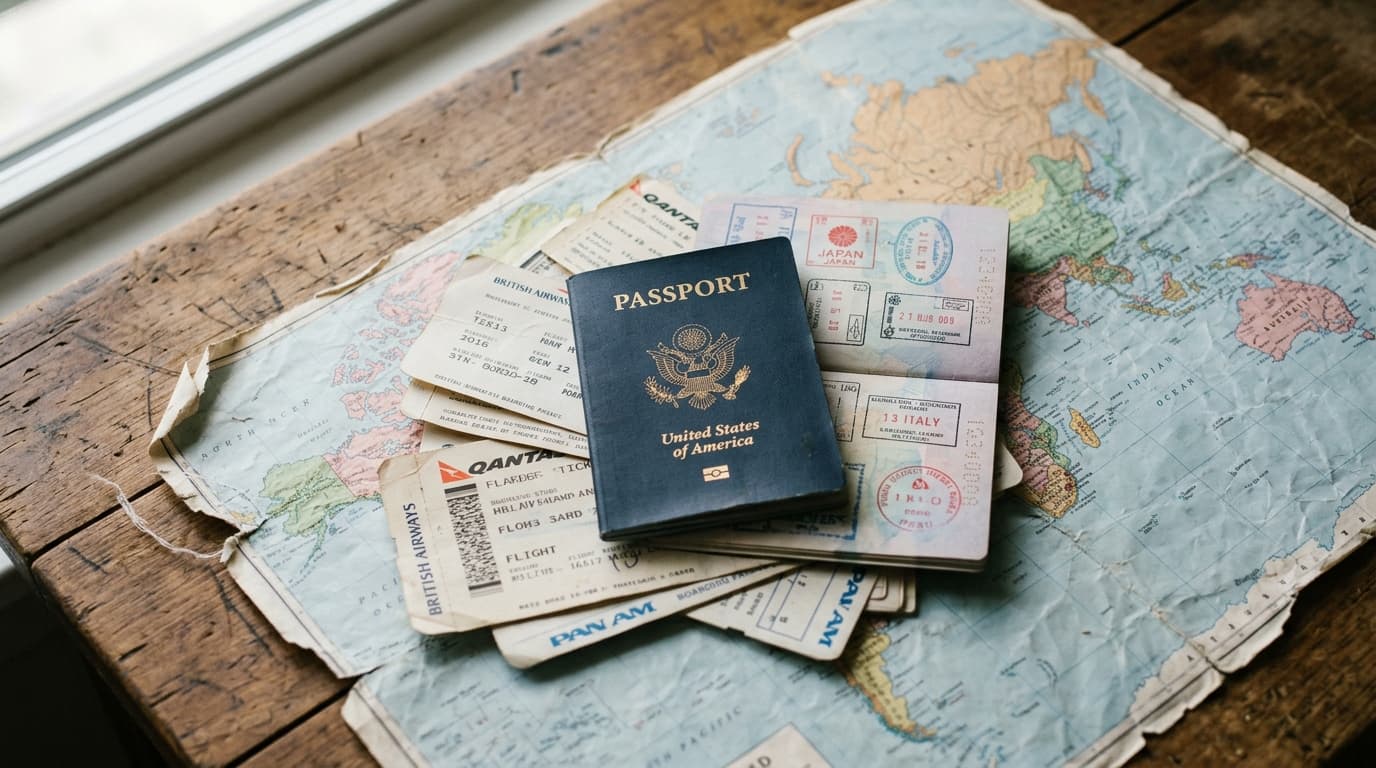
I remember when I started my Nomad journey.. nothing but excitement. Though, I eventually realized that constant travel can be TIRING. Thus, like many other former nomads, I 'graduated' to a slow-mad with a home base. What are your experiences? Nomad for life or will there eventually be a time to slow down for most of us?
Ask why digital nomads quit and the answers come back as myths: they burned out, botched a visa run or ran out of money. The real answer is quieter and far more consistent. It shows up in the data with unusual agreement. Almost three-quarters of digital nomads have been at it for three years or less. Only about one in nine makes it past five. And most who leave never announce it. They just stop posting and fly home.
Stamped Nomad pulled the numbers that actually exist: a national survey, a UCL anthropologist's multi-year study and published visa rules. Then we set them against 16 firsthand Reddit accounts of leaving and six creators who filmed their own exit. The sources were gathered separately. They point the same direction. Every figure below carries a badge for how much weight it can hold.
How to read the badges:
✓ Hard data, national survey or official rule
◐ Study, peer-reviewed or longitudinal research
~ Firsthand, hand-reviewed accounts, qualitative
Nobody quits loudly. They just fly home.
Dave Cook, an anthropologist at University College London, spent years following more than fifty digital nomads as part of a longitudinal ethnography, the rare study that watches the same people across time instead of surveying strangers once. ◐ The exit, he found, almost never looks like a decision.
Many nomads I've interviewed just pack up and go home without telling anyone. Others pop home because they had too much stuff stored with friends and family, fully intending to go back out on the road, but never do.
That quiet drift sits underneath every number that follows. Quitting is rarely a dramatic renouncement of the lifestyle. It's a trip home that slowly becomes permanent. The grid goes quiet, the newsletter stops and there's no farewell post, which is exactly why the lifestyle looks more durable from the outside than it does from the inside.
How long do digital nomads last? About three years.
MBO Partners has run the same national survey for years, which makes it the closest thing the field has to a reliable baseline. ✓ In 2025 it counted 18.5 million American digital nomads, up 153% since 2019. Impressive growth, but the revealing number is tenure: 73% have been nomadic for three years or less and only 11% have passed the five-year mark.
Source: MBO Partners, 2025 Digital Nomads Trends Report (US).
Run those figures forward and the churn is steep. Between 15% and 17% of nomads return to a conventional life every year. A population where roughly one in six exits annually and only one in nine survives past five years is not a movement of lifers. It has a half-life of about three years. That's a separate question from how many nomads actually exist, which is its own mess of invented numbers, but the tenure data is some of the most solid the field has.
Digital nomad burnout: the two-year wall
The survey says when people leave. Firsthand accounts add why the pressure builds and roughly when. Across 16 Reddit threads from people who had left or were weighing it, the timing clusters. ~ Not everyone hits it. Reddit also skews toward the frustrated, so this reads as pattern, not proof. But the shape is hard to miss: a soft wall somewhere between 18 months and two and a half years, where digital nomad burnout stops being about logistics and starts being about life.
Source: hand-reviewed sample of 16 r/digitalnomad threads on quitting and burnout. Qualitative, not a survey.
Early on, the complaints are logistical: a bad Airbnb, flaky Wi-Fi, one more visa run. By the 1.5-to-2.5-year mark they turn existential. The constant planning stops feeling like freedom and starts feeling like a second job. Friendships never move past the first coffee. And the question of whether a nomad could build something lasting with a partner while living like this gets louder every month.
Why digital nomads quit: the cost is social, not financial
The stereotype says people run out of money. Mostly, they don't. Sort the reasons people actually give for why digital nomads quit and money lands near the bottom. What dominates is social: loneliness, friendships that reset every few weeks, dating that stalls because everyone already knows they're leaving.
Source: hand-coded from 16 r/digitalnomad threads and 6 creator exit videos.
Under the loneliness sit the practical grinds that never let up: housing hunts, Wi-Fi checks, gym and grocery resets, the endless repetition of setup decisions. Then there's the loss of a stable body and mind: no fixed desk, no sleep pattern, no kitchen. And a subtler one the long-timers name, the view stops landing. The tenth waterfall in a month registers as nothing.
The creators who filmed their own exit
The same reasons show up on camera, from people who built audiences on the lifestyle. It became its own genre, the "why I stopped being a digital nomad" video. The confessions rhyme. ~
Traveling with Kristin quit after 20 years on the road, citing the milestones she kept missing (births, aging parents) and how hard it was to hold a relationship or a fitness routine while hauling everything she owned.
Dorian Develops torched the laptop-on-the-beach myth outright: glare, sand, no desk, wrecked posture and the quiet guilt of gentrifying places he never actually belonged to.
Myles Dunphy named the dopamine problem. Travel planning is a thrill for the occasional traveler and a chore for the full-timer. He also warned that a lot of nomads are really just running from themselves.
Ty Livezey described the FOMO paradox: guilty for working when he could be exploring, guilty for exploring when he should be working, focused on neither.
Project Untethered coined "beauty fatigue" and flagged the resentment building in hotspots as locals get priced out of their own neighborhoods.
None of them quit travel. Every single one landed on the same fix.
Even the visas expect an exit
Churn isn't only in the surveys and the confessionals. It's written into the paperwork. ✓ Some of the most popular digital nomad visas are non-renewable by design. Estonia's, the program that launched the entire category in 2020, caps out at one year with no renewal. Croatia's works the same way. These aren't residence tracks that build toward a life. They're structured for people passing through. The governments that studied this workforce most closely wrote the exit into the rules.
They don't quit travel. They graduate.
There's a twist that keeps the story about why digital nomads quit from being a sad one. Almost nobody who leaves is renouncing travel. They're rejecting constant motion as a permanent operating system. The common landing spot, on Reddit and YouTube alike, is slow travel: a home base plus longer, deliberate trips. Travel turned back into travel, instead of a life spent rebuilding a life every few weeks.
Landing spots synthesized from the Reddit and creator accounts; the 11% figure is MBO Partners (2025).
MBO's own numbers back the softness of the exit. Among people who have already left, 21% say they will definitely go nomadic again and 58% say they might. ✓ Leaving is less a door slamming than a gear change.
The honest version
So, why do digital nomads quit? Not for the dramatic reasons the highlight reel would predict. They quit because the thing that made it magic, constant movement, becomes the thing that grinds them down. The social life it quietly costs stops being worth the view. The survey data, the anthropology and hundreds of firsthand accounts trace the same curve: a lifestyle most people pass through in about three years and graduate from rather than fail at. The nomads who last tend to be the ones who spot the wall coming before year two and slow down on purpose.